Blog for ESL teachers
Practical tips, methods, and materials for successful teaching
“Do you really celebrate New Year in February?” one Italian learner asked his classmate from China in my mixed-level English group. Questions like this are a perfect way to open up a conversation about cultural differences, family traditions, food – and everything that makes us surprisingly similar, too. In moments like these, intercultural competence in English lessons stops being a theory and becomes a real-life skill – the one that helps learners listen to each other, understand each other and treat each other with respect.
Idioms are part of the DNA of any language. They make speech vivid, memorable and emotionally precise in ways that “ordinary” vocabulary often can’t. Once students start using idioms, they sound far more natural and much closer to real-life English. And a huge number of common English idioms are built around animals: they describe personality, social situations, business life and more. In this article, we will look at popular animal idioms in English and how to teach them so that learners not only understand the meaning, but also feel confident using these expressions in real communication.
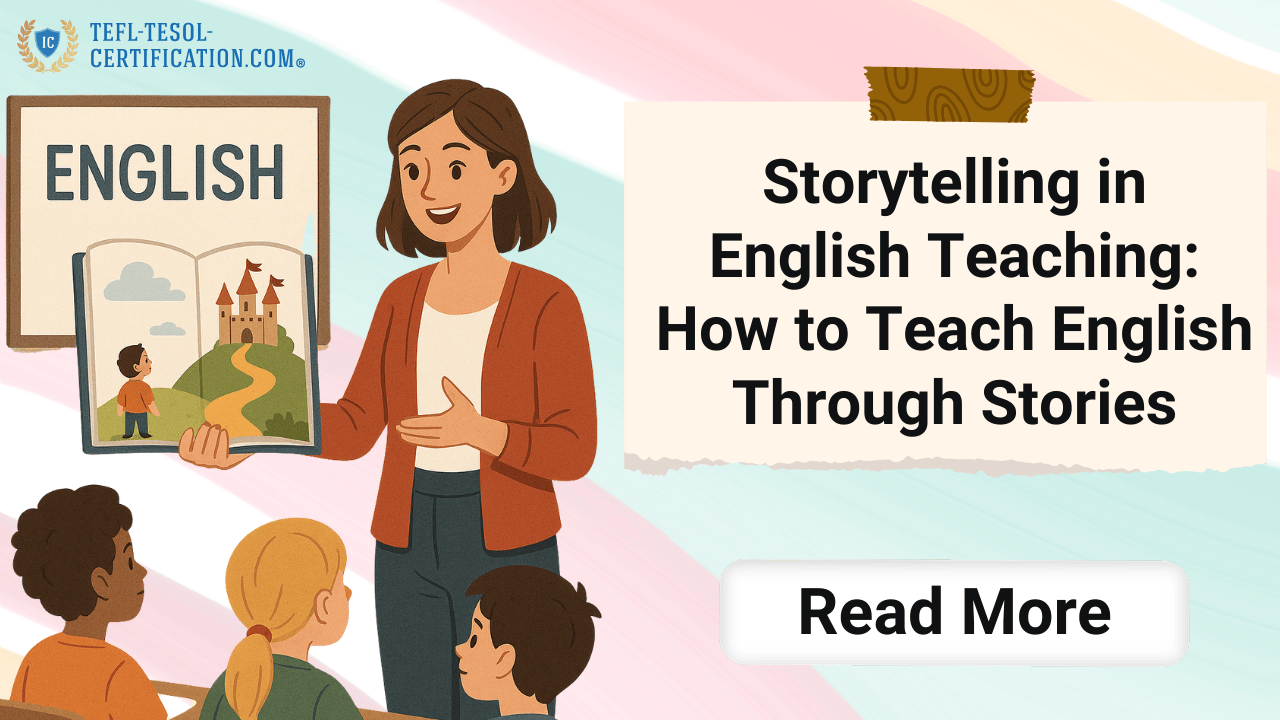
Stories are one of the most natural ways humans learn. For centuries, people have passed on knowledge, values and experience through myths, fairy tales, family anecdotes and real-life case stories. When we hear a story, our imagination switches on, attention sharpens, emotions help us remember details — the brain “hooks onto” characters and events instead of isolated facts and grammar rules. That is why storytelling works so well in English lessons: learners follow the plot, empathise with the characters, predict what comes next, and almost without noticing, they read more, listen more, speak more and use new vocabulary more actively. In this kind of classroom atmosphere, English stops being a list of rules and becomes a tool for understanding and telling stories. In this article, we will look at how to use storytelling in English teaching and turn a standard lesson plan into a memorable, story-based learning experience.
The personal brand of an English teacher is not a logo or a clever username. It is a clear, consistent system of trust you build in the eyes of your students and colleagues. A strong personal brand helps you stand out from other English teachers, attract the right kind of learners, strengthen your professional reputation and build a more stable income. In simple terms, it’s how you show who you are as a specialist, what makes you different, what results you deliver and why people can rely on you. Your brand grows through clear positioning, high-quality teaching, consistent communication and visible proof of your students’ progress. In this article, you’ll find short, practical steps to build a strong, recognisable and sustainable personal brand as an English teacher.
Business English exams such as BEC (Business English Certificate) and BULATS (Business Language Testing Service) are international tests that measure how confidently candidates can use English in professional and corporate contexts. They are especially relevant for learners who work or plan to work in international companies, run their own business, study business or management, and want an official certificate proving their level of Business English.
In this article, we will look at the structure and levels of the BEC exams, discuss how they relate to modern BULATS-style testing, and, most importantly, focus on how English teachers can build effective training programmes that help adults pass these exams and use Business English at work.
and start earning by teaching English in your country, abroad, or online from anywhere in the world! Order the course with a 50% discount 💸 and receive as a gift the support of a personal coach 👨🏫 and job placement assistant! 🎁🚀 Hurry, limited spots available! 🏃♂️💨
💡 Unlock the secrets to doubling your teaching income with our exclusive checklist! 🎯 This checklist is designed for English teachers who want to 📈 attract more students and 🔥 keep them engaged for the long term.
🚀 More students, 💰 higher income, 🌍 complete freedom! ✅ 112 verified platforms with top rates ⏳ Flexible schedule – work whenever and as much as you want 🎯 Simple requirements – start earning right away 💎 Boost your career and income by teaching students worldwide!