Have you ever paused and thought: “What if my career as an English teacher could offer more flexibility, better income, and a clearer sense of purpose?” I remember that moment vividly: late evening, piles of marking, cold tea on the desk — and the realisation that something needed to change. I could either continue down the path toward burnout or build a teaching system where learners progress consistently and I stay energised. Since then, I’ve gone from an overworked classroom teacher to an independent ELT professional with TEFL/TESOL training, hundreds of successful students and a schedule that finally supports my life, not the other way around.
Cambridge English Qualifications are international exams that measure a learner’s level of English for study, work and migration. They are suitable for school pupils, university students and adults who need official proof of their English competence. In this article, I’ll walk you through the main exam levels, what each paper actually tests, and how to plan effective Cambridge exam preparation for students with very different language backgrounds.
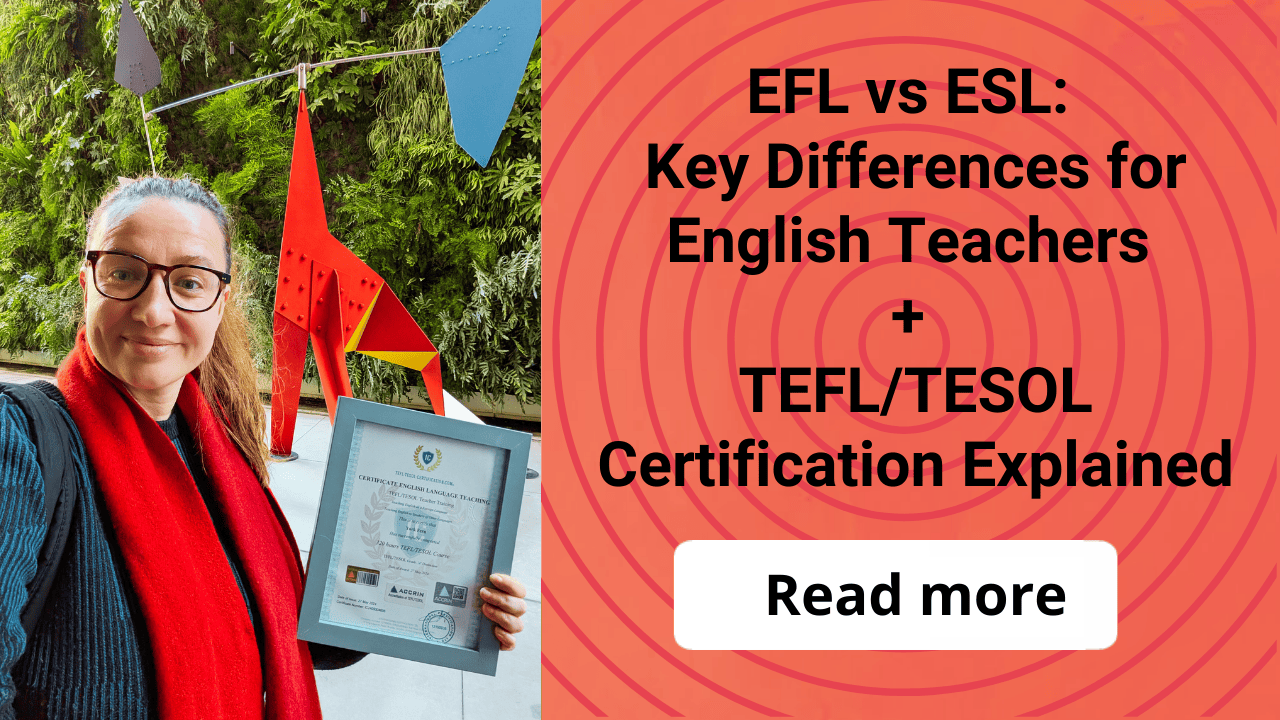
Have you ever mixed up EFL and ESL? I definitely have. And then I realized something important: these aren’t just textbook abbreviations. They describe two very different teaching realities. Once you understand the context, your lesson planning gets easier, your materials make more sense, and your students progress faster.
In this guide, you’ll learn what EFL vs ESL really means for English teachers, how methodology shifts in each setting, and how TEFL/TESOL certification can support your growth—whether you teach online, abroad, or in a multilingual classroom. Grab your favorite drink and settle in. We’ll keep it practical.
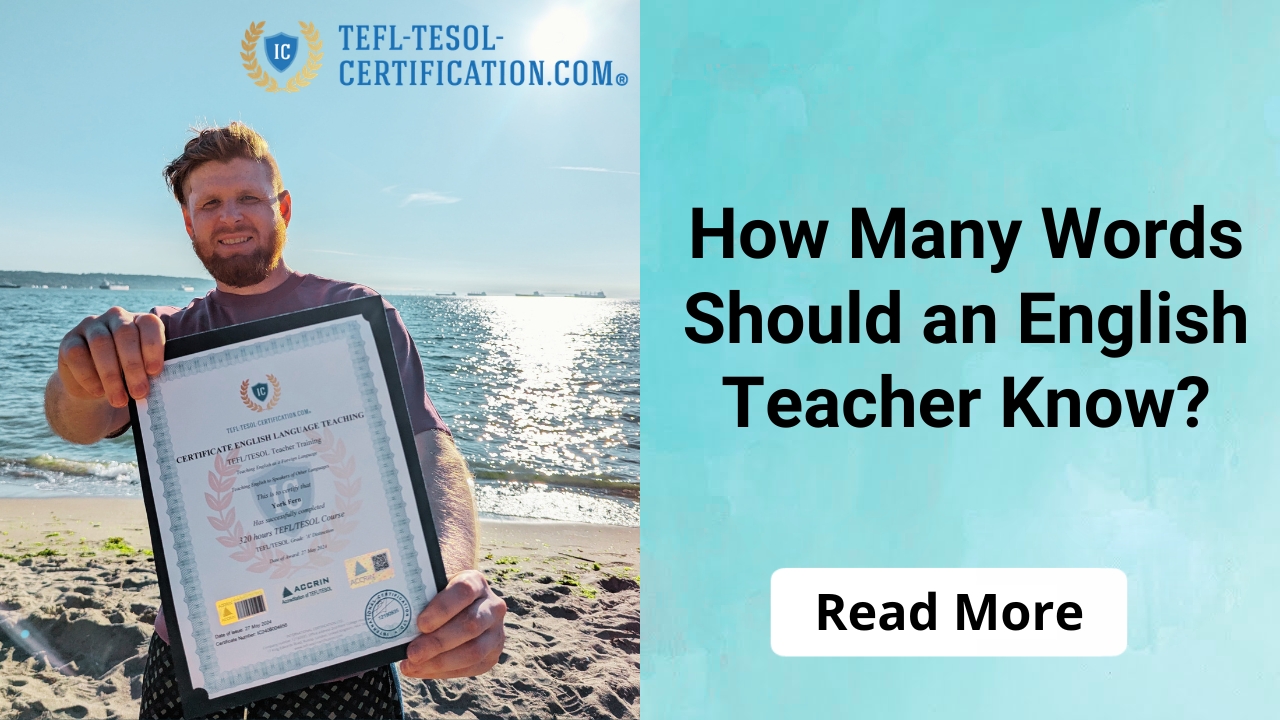
No matter how many years you have spent learning English or teaching it, there will always be a word that catches you off guard. That is completely normal. It happens to everyone, from new teachers to experienced professionals. Language is alive. It shifts, expands, drops old expressions, brings back forgotten ones, and constantly creates new vocabulary.
So if a student asks about a word you cannot recall right away, or one you have never come across before, there is no reason to panic. In fact, being able to admit that calmly shows something important: learning a language is not a stage you finish, but an ongoing process. That is true for students, and it is just as true for teachers. At this point, many people start asking the same question: how many words do you actually need to know for each level of English? And teachers often ask an even sharper one: how many words should you know to feel confident enough to call yourself an English teacher?
In this article, I want to break that down in a practical way and show what kind of vocabulary really matters for an English teacher, and how to keep developing it without burning out.
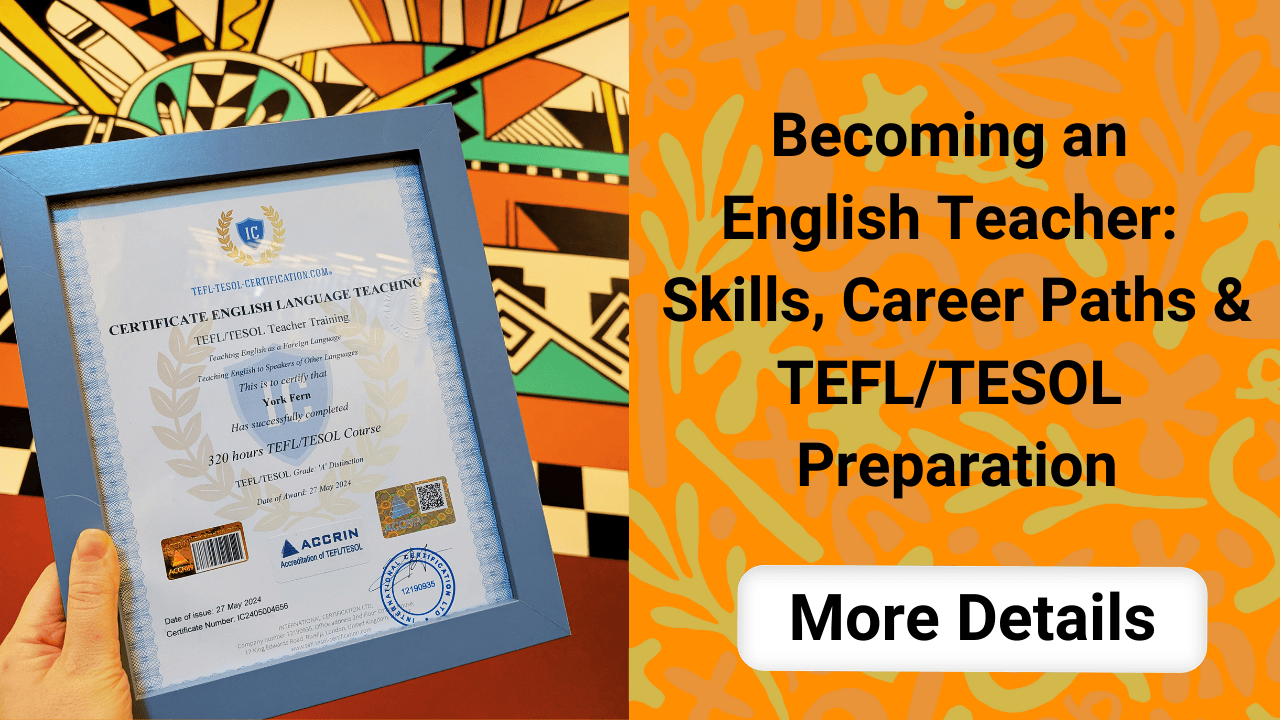
Have you ever felt that the world became a little brighter after a successful lesson? For me, teaching English has always been about that feeling — connection, growth, and real impact. Today, let’s talk honestly and without clichés about how to start a teaching career, what qualifications you need, how TEFL and TESOL certificates help, and where to find jobs if you want to teach online or abroad.
and start earning by teaching English in your country, abroad, or online from anywhere in the world! Order the course with a 50% discount 💸 and receive as a gift the support of a personal coach 👨🏫 and job placement assistant! 🎁🚀 Hurry, limited spots available! 🏃♂️💨
🚀 Get a free 12-step checklist for increasing your income as an English teacher!
💡 Unlock the secrets to doubling your teaching income with our exclusive checklist! 🎯 This checklist is designed for English teachers who want to 📈 attract more students and 🔥 keep them engaged for the long term.
🔥 How to enter the international market with TEFL/TESOL and start earning by teaching English — online, abroad, or in your own country.
🚀 We’ll show you how to upgrade your English teaching career — whether you’re starting from scratch or already have experience. We’ll explain how a TEFL/TESOL certificate can help you grow your career online and offline — in your own country or abroad. We’ll also walk you through how our all-in-one training works, with a personal tutor and job placement support.
🎉 Get your free practical book: 📖 “20 Ready-Made EFL & ESL Lesson Plans for English Teachers”.
💼 Less preparation - more engagement and results in lessons. 🔹 20 topics: family, hobbies, travel, debates and much more 🔹 For beginners and experienced teachers 🔹 Fully ready-made lessons - open and conduct lessons easily! 🔥 Save time and make lessons interesting and effective