“Do we have to read the whole article?” — if I had a dollar for every time I heard that in class, I’d be writing this from a beach mansion. The funny thing is that my answer is often “no”. What my learners really need first is skimming reading, and yes, many of them still google strange things like reading skimming, skim reading or “how to read fast” the night before an exam, hoping for a miracle trick.
Have you ever wondered why two lessons with the same plan bring completely different results? The answer often lies in the development of a teacher’s soft skills. When we grow our soft skills as English teachers, every plan starts to “breathe”: the class listens, trusts, and moves forward — you can literally feel it in the air. 😊
Stories are one of the most natural ways humans learn. For centuries, people have passed on knowledge, values and experience through myths, fairy tales, family anecdotes and real-life case stories. When we hear a story, our imagination switches on, attention sharpens, emotions help us remember details — the brain “hooks onto” characters and events instead of isolated facts and grammar rules. That is why storytelling works so well in English lessons: learners follow the plot, empathise with the characters, predict what comes next, and almost without noticing, they read more, listen more, speak more and use new vocabulary more actively. In this kind of classroom atmosphere, English stops being a list of rules and becomes a tool for understanding and telling stories. In this article, we will look at how to use storytelling in English teaching and turn a standard lesson plan into a memorable, story-based learning experience.
Have you ever had this happen? The lesson feels like a win, students were engaged, the timing worked, the activities flowed—and then one honest student comment knocks you off balance for the rest of the evening. For a long time, student feedback for English teachers felt intimidating and strangely personal to me. That changed when I stopped treating feedback as a verdict and started using it as a practical tool. Now student feedback in ELT helps me refine lessons with confidence—calmly, step by step, without overthinking every detail.
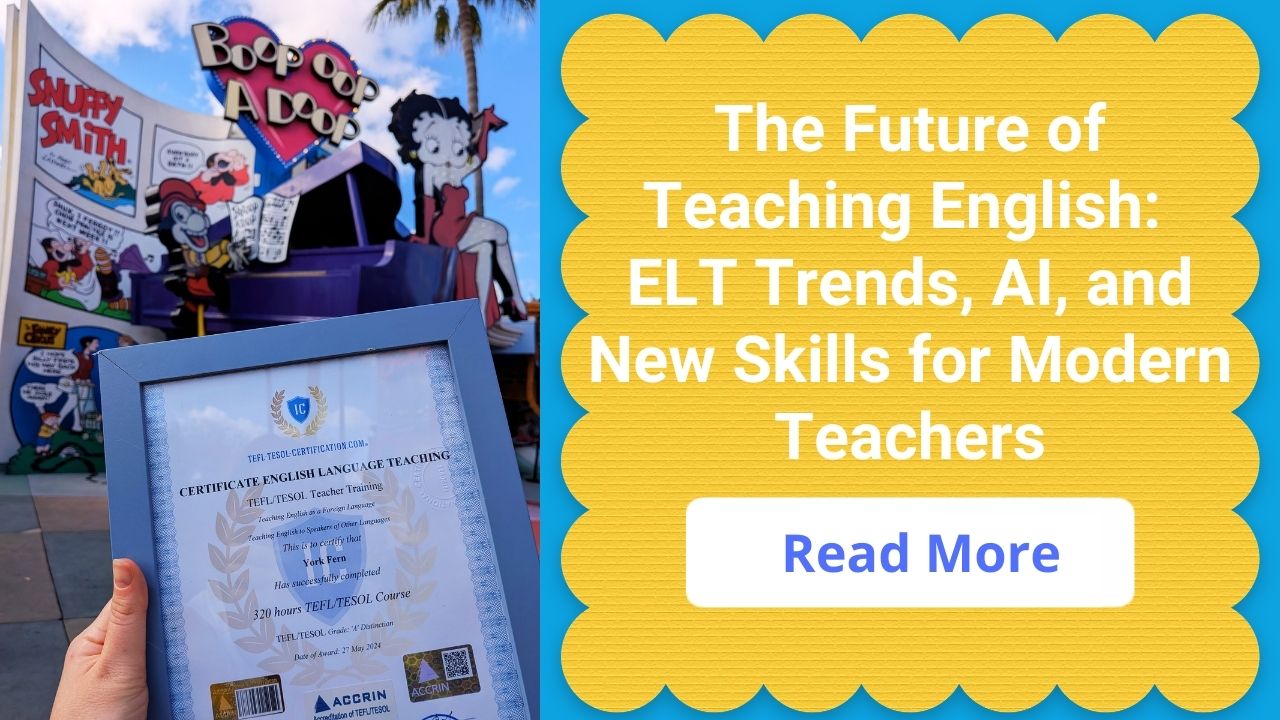
“York, aren’t you worried about the future of teaching English? What if artificial intelligence replaces teachers soon?” I hear this question from colleagues at almost every conference or professional meetup. And every time the conversation leads to the same conclusion: the future of English language teaching is not about teachers disappearing. It is about new roles, modern educational technology, and an honest conversation about what we as educators must change and develop in ourselves.
and start earning by teaching English in your country, abroad, or online from anywhere in the world! Order the course with a 50% discount 💸 and receive as a gift the support of a personal coach 👨🏫 and job placement assistant! 🎁🚀 Hurry, limited spots available! 🏃♂️💨
🚀 Get a free 12-step checklist for increasing your income as an English teacher!
💡 Unlock the secrets to doubling your teaching income with our exclusive checklist! 🎯 This checklist is designed for English teachers who want to 📈 attract more students and 🔥 keep them engaged for the long term.
🔥 How to enter the international market with TEFL/TESOL and start earning by teaching English — online, abroad, or in your own country.
🚀 We’ll show you how to upgrade your English teaching career — whether you’re starting from scratch or already have experience. We’ll explain how a TEFL/TESOL certificate can help you grow your career online and offline — in your own country or abroad. We’ll also walk you through how our all-in-one training works, with a personal tutor and job placement support.
🎉 Get your free practical book: 📖 “20 Ready-Made EFL & ESL Lesson Plans for English Teachers”.
💼 Less preparation - more engagement and results in lessons. 🔹 20 topics: family, hobbies, travel, debates and much more 🔹 For beginners and experienced teachers 🔹 Fully ready-made lessons - open and conduct lessons easily! 🔥 Save time and make lessons interesting and effective